
US Studies Network Scholar Profile
This is part of a series profiling members of Cambridge’s US Studies Network (USN), which is fundraising to become the Cambridge USA Centre (CUSAC). Founded in 2025, the USN connects Cambridge scholars working on the United States as an empirical and theoretical site across faculties, departments, and schools. The network’s initial ambition is to encourage better coordination and awareness of existing events and initiatives, and then to facilitate new collaborations on research and public engagement across and beyond the University.
In the first instalment of the USN scholar profiles, we feature three members:
Dr Caroline Johnston (History) examines the oil and coal boom of the 1970s and 1980s in the Rocky Mountain region, to consider the broader relationship between fossil fuels, right-wing politics, and the mythos of the American west. Caroline talks about the subfield of Western history and how she connects it to scholarship in geology, energy history, and political economy. Read more.
Dr Joe Sutliff Sanders (Education) studies the form, genre, and ideology of children's media in the United States, including animation, comic books, picture books, games, and novels. Joe talks about his project on the history of comic books in US libraries, and the surge in collections since the 1970s. Read more.
Dr Ali Meghji (Sociology) puts critical race theory into dialogue with postcolonial sociology in order to understand the global dynamics of racialization and racism. Ali talks about his recent project on W. E. B. Du Bois's anti-colonial radicalism. Read more.
Dr Caroline Johnston (Mellon Research Fellow in American History, Faculty of History)
Bio: Caroline is a Mellon Research Fellow in American History at the University Cambridge, specializing in the political, environmental, and economic history of the United States. Her current book project examines the oil and coal boom of the 1970s and 1980s in the Rocky Mountain region, to consider the broader relationship between fossil fuels, right-wing politics, and the mythos of the American west.

“Every week, it feels like there’s another news story that connects to oil, right-wing politics, or both. That makes my work very legible to people—it’s easy for them to see the relevance and to bring their own questions and concerns to it.”
Dr Joe Sutliff Sanders (Associate Professor, Faculty of Education)
Bio: Joe is an Associate Professor in the Faculty of Education who specialises in children's media of the United States, including animation, comic books, picture books, games, and novels. Joe’s research tends to begin with questions about form and genre—How can a work of nonfiction signal a lack of authority? What does the shape of a picture book invite? How does the formula of best-selling novels about orphan girls shift over time?—and extend then to explorations of ideology. His approach to children’s literature is therefore primarily textual, historical, and theoretical. Over the course of his career, Joe has been awarded numerous fellowships from prestigious institutions such as the National Endowment for the Humanities and the Fulbright Commission, and he has published eight books and dozens of journal articles spanning his areas of interest. Joe brings to the US Studies Network over ten years of teaching experience in literature departments at universities across the United States.
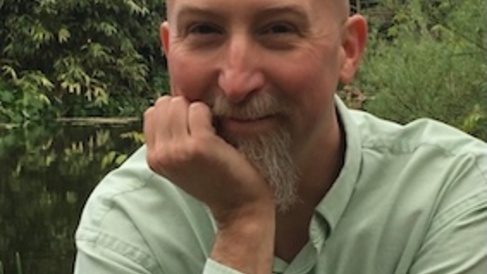
“From the beginning of my academic career, back as a university student, I was trying to figure out how to talk in high‑brow ways about things that were not high‑brow, and to produce readings that were not just indulgent, but were genuinely insightful and that helped us understand the things we love better. And I think that's still what I'm doing. I just kind of keep doing that over and over again.”
Dr Ali Meghji (Associate Professor in Social Inequities, Department of Sociology)
Bio:Ali is an Associate Professor in Social Inequalities. His research puts critical race theory into dialogue with postcolonial sociology in order to understand the global dynamics of racialization and racism. In doing so, his work overcomes the methodological nationalism which characterises much contemporary race scholarship, and develops a way forward for thinking about transnational raciality.
Can you start by telling us about your academic background and how you came to Cambridge?
Ali: I’m an Associate Professor of sociology, and my work bridges postcolonial sociology with more canonical sociology of race. Broadly, I’m trying to develop a transnational understanding of race and racism, with an empirical focus on empire and anti-colonialism.
I started my post in 2018, so I’ve been in this role for several years now. Before that, I spent my entire academic life at Cambridge, but I’ve also had visiting stints at other universities. In line with the US Studies Network, I spend a lot of time in the United States. I’ve held fellowships at Harvard’s Weatherhead Center for International Affairs and the Hutchins Center for African and African American Research, and more recently at the Black Metropolis Research Consortium at the University of Chicago. The archives I work in are mostly US-based, in places like New York, Washington DC, and Nashville (because Fisk University, one of the most well-known HBCUs, is there).